
NUTRITION AND HEALTH
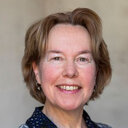
Interview with Leendert Wesdorp
Euro Fed Lipid 2027:
the crossroads of science and industry
In 2027, the international Euro Fed Lipid Congress will return to the Netherlands for the first time in over ten years. More than 600 scientists and professionals from the oils and fats industry will travel to Rotterdam for the latest developments in the field of oils and fats. Leendert Wesdorp, chair of the Benelux Lipid Network and closely involved in the organisation, sees the congress above all as an opportunity to bring science and industry closer together. Because it is precisely where new knowledge and practical questions come together that opportunities for innovation arise.
Who is Leendert Wesdorp, and what do you do these days?
I am a food technologist, specialised in process technology, and over the years I have mainly focused on oils and fats. For a large part of my career I worked at Unilever, where I held various management positions in technology, innovation and R&D. As a result, I have been closely involved in the oils and fats sector for a long time. These days I advise companies on food technology, innovation and R&D strategy, and I share my knowledge, among other ways, through the MVO Academy. In doing so, I think it is important not only to deliver advice, but also to remain involved in its implementation. I want to see that it genuinely lands and delivers value.
You helped ensure that Euro Fed Lipid 2027 is coming to Rotterdam. How did that come about, and why did you want to bring the congress here in particular?
From the Benelux Lipid Network, we felt it was time to bring the congress back to the Netherlands. That was about eleven years ago for the last time. Together with the City of Rotterdam, we therefore submitted a bid.
Such an international congress in your own country is stimulating for scientists, students and technical people from industry. Moreover, we have a large oils and fats industry here. Because the congress is taking place in Rotterdam, it is also more accessible for employees from, for example, quality and development departments. For companies, it is simply easier to send them to Rotterdam than for several days to a congress elsewhere in Europe. That is why we hope to reach many people from industry.
What can we expect from the congress in terms of content?
It is a scientific congress with three days full of presentations, poster sessions and meetings. But for this edition we also want to look explicitly at the application of science. You can have a wonderful scientific breakthrough, but then you have to ask: can we apply this in industry, and is it financially viable?
That is why we also welcome contributions from companies. Not advertising stories, but substantive contributions about technical problems, new developments and solutions from practice.
You are chair of the organising and scientific committee. What does your role involve?
My role is mainly about the content: making sure the programme is attractive and good. We have तयined which topics should be covered, from fat oxidation and processing to biofuels, precision fermentation, analytical science and oleochemistry.
For the various sessions, we deliberately look for people from both science and industry. The call for papers is now open. Once the submissions are in, the session leaders will assess them and further shape the programme.
You strongly emphasise the importance of the connection between science and industry. Why is that interaction so important?
If, as an industry, you want to be better than elsewhere, you also have to be technologically better. To do that, you need to know what is happening scientifically.
The challenges facing industry must be known to scientists, so that they can inspire them to do research and develop solutions. Conversely, scientists sometimes discover something without knowing exactly how it can be applied in practice. Contact with industry can then help to arrive at a solution that really works.
Even for companies with large in-house R&D departments, it is important to look beyond their own day-to-day circle. That is precisely where you encounter different knowledge and different ways of thinking.
Which scientific and technological developments do you currently find most interesting?
There is a lot happening. Analytical techniques are becoming increasingly advanced, and green processing and more climate-friendly production are also receiving a great deal of attention.
One development I find particularly interesting is lipidomics. With modern analytical techniques, we can suddenly distinguish hundreds of different lipids. You can then investigate what function those substances have and, for example, what they do in the human body. That can provide new insights for nutrition, health and product innovation.
In addition, you see developments such as precision fermentation and tailor-made fats. Climate change also has consequences for raw materials and supply chains. The food industry may not be known for spectacular innovation, but I think much more is becoming possible at the moment.
Where do the Benelux Lipid Network, Euro Fed Lipid and MVO intersect?
The Benelux Lipid Network is one of the eleven national organisations that together form Euro Fed Lipid. With MVO there is a great deal of overlap in terms of content, because MVO members are active in the same sector in which we are technically and scientifically active.
You can see that, for example, in the MVO Academy, where various people from our network share their knowledge. Scientific independence remains important, but at the same time you need contact between science and industry. Companies benefit from scientific knowledge and researchers need to know which questions are playing a role in practice.
What do you hope people from the Dutch oils and fats sector will ultimately take away from the congress?
Inspiration. People from industry can discover that there are other ways of looking at their problems. Scientists, in turn, meet people from companies who are working on issues they may not yet have thought about.
In the past, I myself sometimes went to these kinds of large congresses with some hesitation. But every time I met people again afterwards and thought: this is interesting to follow up. That can lead to new contacts, research and applications.
My appeal to MVO members is therefore: put the congress in your diary and come along. And if you are working within your company on an interesting technical development or an issue from which others can learn, then also consider making a substantive contribution. We would particularly welcome more contributions from industry. Companies that want to present themselves in a different way can also take part in the exhibition or sponsor the congress.
For more information: Nicole Vervaet