Reflections by Gerrit
The success of the MVO basic course “Oils and Fats”
At the end of November, the MVO basic course “Oils and Fats” will be held. This course for employees in the oils and fats chain is held twice a year and is very popular.
From the beginning in 1997 until long after my retirement, I was involved in the course. It amazes me that a relatively small part of my former work could grow into a long-term activity. The enjoyable contact with the course participants has certainly contributed greatly to this.
What is the origin of this course and why is it so successful?
Almost 30 years ago, Unilever started a two-week course on oil processing and margarine production. This course was given several times in the Netherlands and then rolled out within Unilever worldwide. Due to a change in the company’s priorities, interest in this course declined after the turn of the millennium.
Unilever then sold a number of the oil processing companies. In the sales agreement for some of these companies to the Malaysian company Golden Hope (later Sime Darby), a clause on knowledge transfer to this company was included. As a result, a four-day course started at Golden Hope’s training centre on Carey Island, an old plantation west of Kuala Lumpur (see photo 1). This course was given annually until 2011.
MVO had meanwhile, together with companies in the sector, started a course on food safety. It quickly became clear that not all participants had sufficient knowledge of the chain to follow this course successfully. That is why a one-day basic course on oil processing was added. The demand for this introductory course exceeded that for the food safety course. The priorities were reversed: the basic course became the main course, with food safety as one part of it.
With the cooperation of the NVWA, the right focus on food safety was guaranteed.
What explains the success of this course?
The course builds on the experience of the aforementioned predecessors. A non-academic approach was also chosen, without the influence of commercial parties such as suppliers of equipment and tools.
Participants gain basic knowledge of the complete production chain, from oil crop to application in products. This concerns general knowledge that is not competitively sensitive. The lessons are hardly ever given by professional lecturers, but by enthusiastic speakers from the field. For them, contributing to the course twice a year is a small, enjoyable side activity.
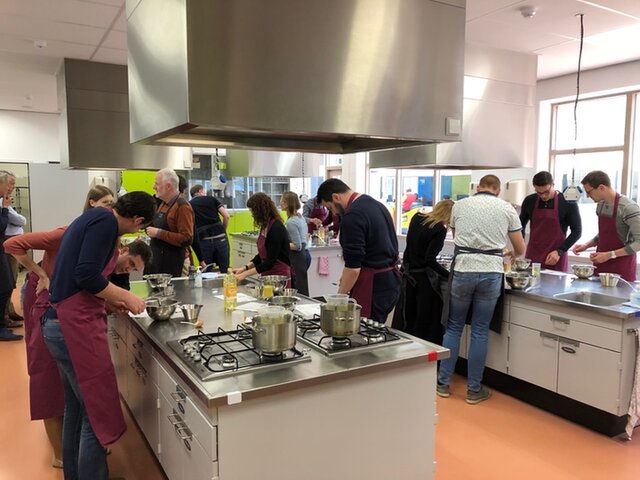
Practical sessions on oil pressing, a visit to an old oil mill and making margarine and mayonnaise yourself (see photo 2) provide welcome variety to the presentations. There is also enough time for participants to get to know one another during breaks, lunches and dinners.
A break during corona?
Even during corona, the course continued as normal and the presentations were given online from the MVO office. Participants received a box with the course materials in advance. They had to crush oilseeds with a hammer on a blotting paper to see whether an oil stain appeared on the paper. This does not happen with soybeans, but it does with sunflower seeds. Crystallisation was explained with dolls’ house chairs. Nevertheless, this format was valued less highly than traditional presentations by lecturers in a hall (see photo 3).
What started in 1997 as a one-off activity by one company has grown into a popular course for the oils and fats industry for participants from across the entire chain. The cooperation of the companies in this chain is essential.
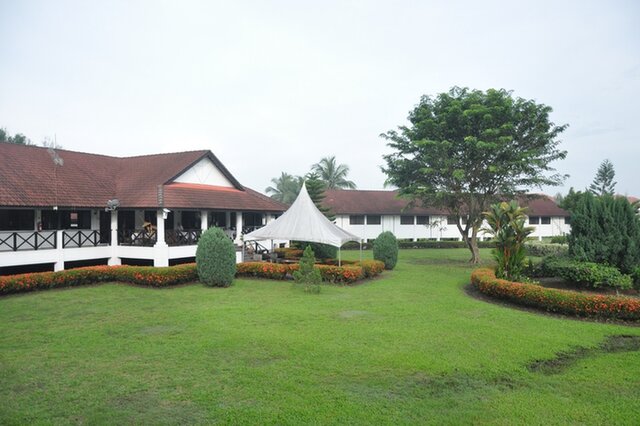
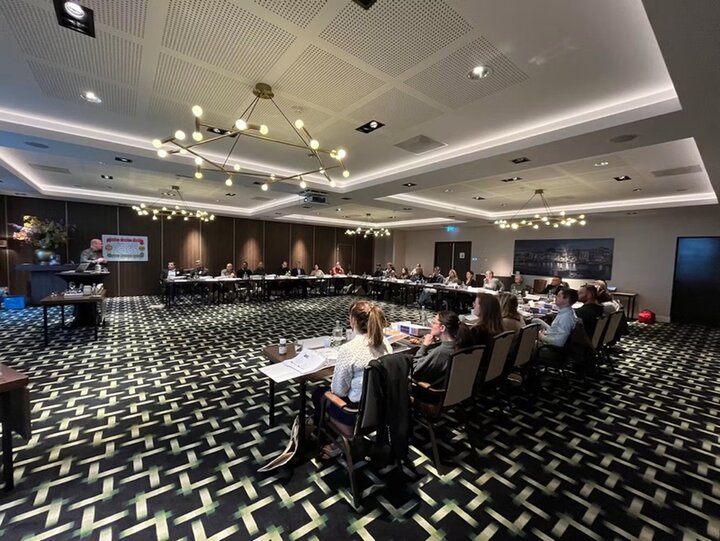
Photo 1: The Sime Darby training centre on Carey Island
Photo 2: Making margarine and mayonnaise
Photo 3: The hall with participants
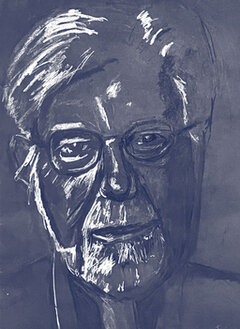
Gerrit van Duijn, with roots in Delft and a PhD in technical sciences, worked for decades in the world of oils and fats, including at Unilever and MaasRefinery. Now that Gerrit is retired, he shares his reflections and experiences as a columnist in our magazine. Over the next five editions, you will read a new story each time from the series - Gerrit’s Reflections.